
Why Body-Based Grounding Strategies Are My Go-To as an Occupational Therapist, Wellbeing Coach and Sensory Integration Practitioner
As an occupational therapist, wellbeing coach and sensory integration practitioner for teens and young adults, I’ve found that the most effective grounding strategies are often the simplest, and they begin in the body. Time and again, I see how body-based approaches can be in supporting regulation in the moment, especially when someone is overwhelmed, anxious, or disconnected.
In this post, I share why I support my clients to develop body-based grounding strategies, and why I believe it forms the foundation of meaningful, sustainable regulation.

The Power of Sensation
At the heart of sensory integration is the understanding that our nervous system is constantly taking in and organising information from the body. Proprioception (sensory input from muscles and joints), vestibular (sensory input from receptors in the inner ear), and touch are particularly important sensations for helping us feel safe, connected to our body and in control.
Proprioception is particularly powerful because of it’s organising affect on the nervous system. It provides clear, predictable sensory signals to the brain systems involved in body awareness, movement, arousal (how activated the nervous system is), sensory processing, and emotional safety. This consistent input helps the nervous system feel grounded, contained and secure.
Vestibular input is also important; it works closely with proprioception to provide information about movement, balance, spatial orientation and coordinating the body’s responses to changes in position and motion. Vestibular inputs are particularly influential with changing how alert you feel - think about how simply going on a short walk over lunch break can make you feel more awake after a morning seated at your desk. Vestibular input can alert or calm the nervous system, helping the body feel more balanced, settled, and in control.
Touch provides direct feedback about contact between the body and environment. This input is closely linked to brain systems involved in body awareness and emotional safety. When experienced as safe and predictable, touch can be deeply calming and reassuring, helping the nervous system to feel contained, soothed, and more at ease.

Accessible in Moments of Overwhelm, Anxiety and Distress
A key reason that body-based strategies are helpful in supporting to down-regulate in moments of overwhelm, anxiety or distress is due to the role of implicit memory, this is sometimes described as feeling memory. Implicit memories are stored in the body and nervous system rather than in conscious, narrative recall and show up in sensations, emotions and automatic reactions to situations.
Body-based strategies work directly with the nervous system. Rather than asking someone to think differently or make sense of their experience through reasoning, they work by changing how the body feels. This is particularly helpful in states of overwhelm or distress when it can be harder to consciously rationalise the experience, and the implicit, body-based memory systems can be more highly active.
Feeling memories can also show up during verbal recall of an upsetting or difficult experience. Talking about what has happened can sometimes activate the same implicit memory networks linked to the original situation. This may be the reason why, for some people, describing a memory can bring back the same felt intensity as experienced at the time.
Body-based grounding offers an alternative pathway. Instead of activating these networks through verbal recall, it works directly with the body to create a sense of safety in the present, helping to organise and ground the nervous system without needing to revisit the experience through language.
As body-based strategies don’t rely on verbal abilities or require strong levels of verbal reflective insight, this also makes them additionally helpful for people who have underlying difficulties in these skills.

Building Awareness from the Inside Out
Body-based grounding practices aren’t just helpful as an immediate support strategy, they can also develop self-awareness over the long-term. Consistently using sensory, body-centred strategies can help people to become more in tune with their body, notice what they need, and respond with what helps them to feel connected and in control.
Over time, this builds a stronger connection between physical sensations and emotional states. It empowers people to:
Recognise early signs of moving outside of an arousal state which is helpful or well-matched to a situation.
Understand their unique sensory preferences.
Choose strategies that work for them.
Understanding your own body and nervous system is where sustainable independence in wellbeing truly begins.
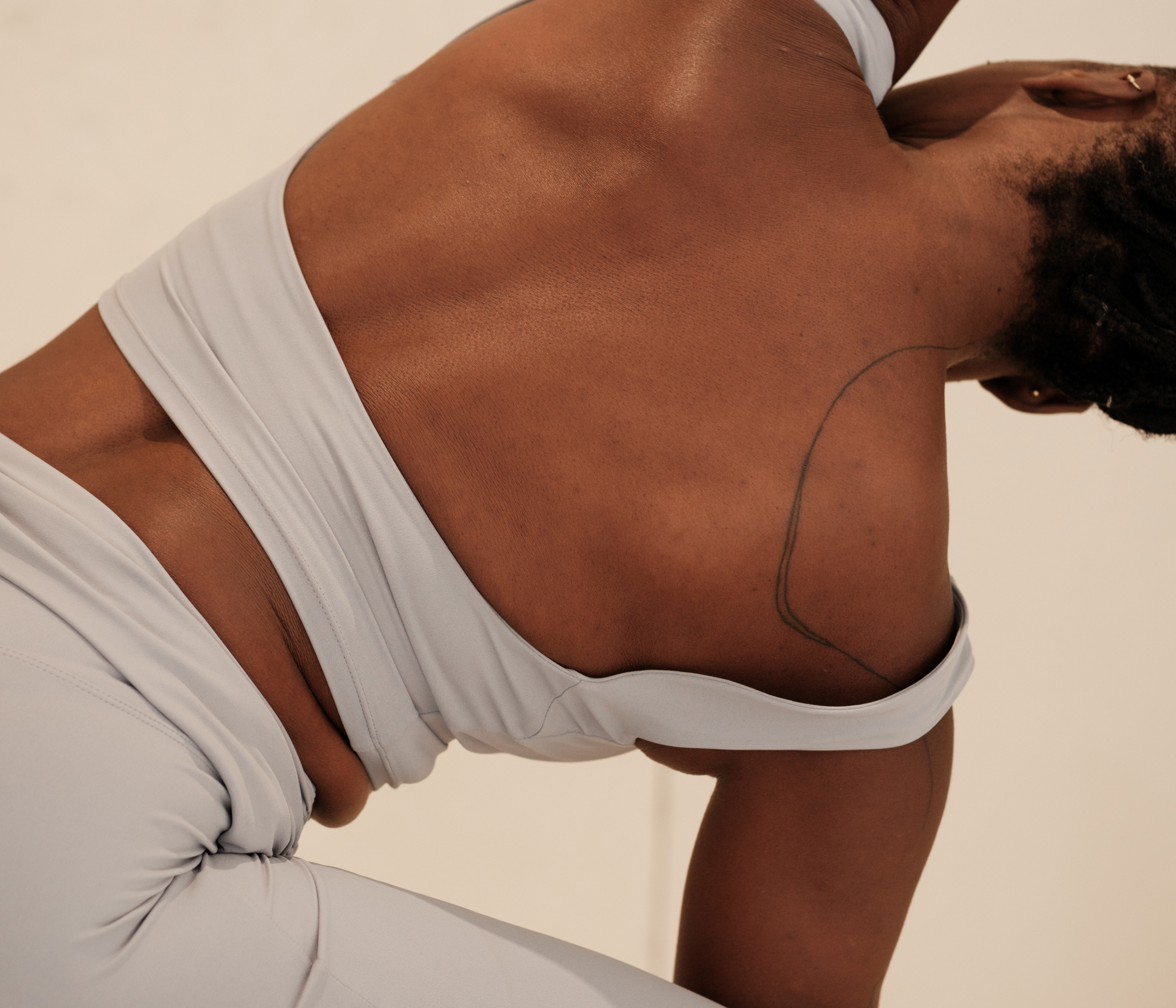
Easy Body-Based Grounding Strategies
Here are some simple body-based, sensory grounding techniques for down-regulation (organising and calming your nervous system) you can try to get started. It can be really helpful to explore these strategies when you’re already feeling at ease, rather than waiting until moments of overwhelm to try them for the first time. This gives you the chance to notice what feels supportive and effective for your body, so they’re easier to access when you need them.
Remember that individual nervous systems will respond differently, so try not to feel disheartened if these strategies don’t feel right for you.
Rhythmic movements: Bouncing gently and rhythmically on a large gym ball up and down, or rocking yourself back and forth, keeping your feet secure on the ground.
Push your shoulders up to your ears and move them back down slowly to release tension, attending to the movement and noticing how it feels. Slowly roll your shoulders or swing your arms in slow, controlled circles.
Butterfly: Sit on the floor, bend your knees, press the soles of your feet together and drop your knees out to the sides. Hold the tops of your feet with your hands, pressing the thumbs against the soles of your feet.
Self-Hug: Cross one arm over your body so that your hand rests on the side of your ribcage beneath your opposite arm. Bring your other arm over the top, wrapping yourself in a gentle hug. Let your elbows relax and drop naturally, noticing the comforting weight of your arms resting on your chest. Take a few slow breaths and feel the sense of support and connection in your body.
Progressive Muscle Relaxation: Intentionally tense and and release different muscle groups starting with your toes and moving all the way up to your head. Notice the contrast between tension and release.
Disclaimer: This content is for informational purposes only and is not a replacement for therapy, medical care, or professional advice tailored to your individual needs.